- Posts: 2014
List of scientists who became creationists after studying the evidence
09 May 2015 21:55 #191416
by Gisteron
Better to leave questions unanswered than answers unquestioned
Replied by Gisteron on topic List of scientists who became creationists after studying the evidence
I don't quite got it either, but I did count a total of 15 explicit lies and 2 that may be a matter of expression and interpretation. With the summary post there was only one of each.
Better to leave questions unanswered than answers unquestioned
Please Log in to join the conversation.
- OB1Shinobi
-

- Offline
- Banned
-

Less
More
- Posts: 4394
09 May 2015 22:03 - 09 May 2015 22:03 #191418
by OB1Shinobi
People are complicated.
Replied by OB1Shinobi on topic List of scientists who became creationists after studying the evidence
if youd be so kind as to point out these explicit lies so that i may be aware of the deception i am explicitly attempting?
People are complicated.
Last edit: 09 May 2015 22:03 by OB1Shinobi.
Please Log in to join the conversation.
- OB1Shinobi
-
- Offline
- Banned
-
Less
More
- Posts: 4394
09 May 2015 23:05 - 09 May 2015 23:16 #191424
by OB1Shinobi
People are complicated.
Replied by OB1Shinobi on topic List of scientists who became creationists after studying the evidence
actually Gisteron im going to respond this way:
i was cordial and offered what i belive to be valid ideas in the conversation
you, as usual are a prig
im aware that i have a bit of a tendency to be a prig as well so i wont harp overmuch on it beyond the following
calling someone an explicit liar because they present ideas you dont agree with is not only further demonstration of your poor interpretive abilities and underdeveloped social skills
but also contrary to the whole point of public discussion
its easy enough to hide behind a sense of smug superiority but if you cannot address the issues presented in the discussion then you forfeit the right to relevance
im open to an explanation which will demonstrate that i am not correct in what i say
but i am not a liar
i make no claims to an intellect beyond my time or of any significantly higher ability than the average person
but i know my own intelligence and it is sufficient to the analysis of evidence and to the task of discourse - if the best retort which you have to what i have said is "liar liar pants on fire" then youve no retort at all
i was cordial and offered what i belive to be valid ideas in the conversation
you, as usual are a prig
im aware that i have a bit of a tendency to be a prig as well so i wont harp overmuch on it beyond the following
calling someone an explicit liar because they present ideas you dont agree with is not only further demonstration of your poor interpretive abilities and underdeveloped social skills
but also contrary to the whole point of public discussion
its easy enough to hide behind a sense of smug superiority but if you cannot address the issues presented in the discussion then you forfeit the right to relevance
im open to an explanation which will demonstrate that i am not correct in what i say
but i am not a liar
i make no claims to an intellect beyond my time or of any significantly higher ability than the average person
but i know my own intelligence and it is sufficient to the analysis of evidence and to the task of discourse - if the best retort which you have to what i have said is "liar liar pants on fire" then youve no retort at all
People are complicated.
Last edit: 09 May 2015 23:16 by OB1Shinobi.
Please Log in to join the conversation.
10 May 2015 12:24 #191487
by Gisteron
Better to leave questions unanswered than answers unquestioned
Replied by Gisteron on topic List of scientists who became creationists after studying the evidence
Fine, fine, let's do this...
This is a map of the biggest world religions. Notice how well defined the boundaries mostly are.
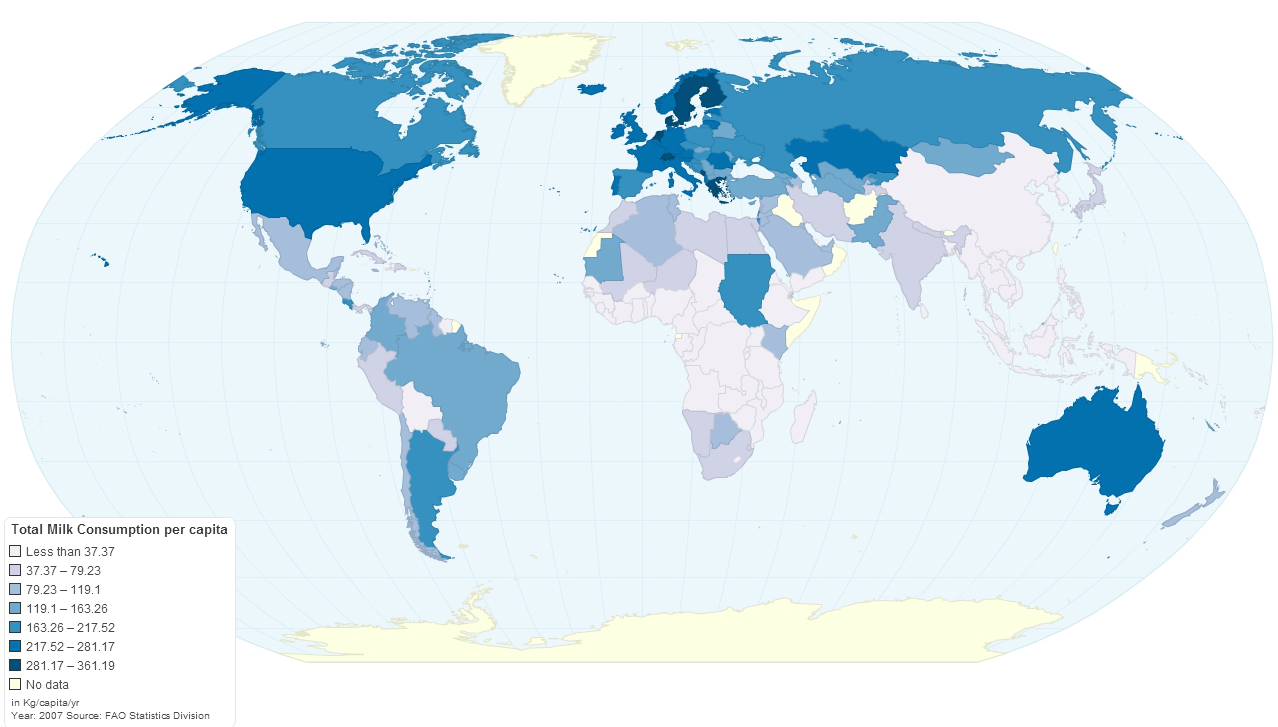
This is a map of milk consumption, for comparison. Just to illustrate that judging by distribution patterns, religions might as well be habits or tastes. Animal and disease spreading patterns look similar, too, implying that memes have some similarity to genes. Here is another illustration:
This is a US map of Christian denominations. Notice how Baptists, Lutherans and Catholics dominate their respective areas with mostly clear boundaries to the other tribes. I predict that in the border regions there will be high church attendance because faced with those of other faiths people will try to stick with theirs and mark their tribe and territory.
And look at that, a church attendance map . And yes, it shows just what I predicted it would: The most attendance tends to be in places of most diversity: The middle line between the Dakotas and Texas, and, very noticeably, Utah and southern Idaho, the Mormon region that is so narrowly surrounded by Catholics.
As for isolationism, this is more clearly visible with deeply islamic countries and how they shun particularly the internet or lose believers if they don't. One could also compare religious diversity or religiosity with internet access in the US, and you will see a pattern emerge.
Before this comes back to me, yes, I did notice the distinction of dogma and dogmatism. I am addressing the mindset that makes one produce and accept dogma. That is what I mean by dogmatism. A mindset which combats the tendency to dogmatism is in my view a force for good in this world.
You went on to say that fields like psychology are moving to make a science of religion. I would agree in so far as they try to understand how religious thought comes about and how it affects us. If that is all you meant, no argument here.
I had a few points to make about what you said regarding the IP, but then I realized that you use some labels the way Campbell would, and I shan't argue with that for now. I will say though that I think particles and frequencies are real in a different way than myths are. Myths express what we feel about this world and our place in it, as does all art. And while the tales themselves can either have occurred or not, what they express does not much depend on their historical accuracy.
The moral point is now moved to a different thread, so there it shall be discussed amongst us all.
Now one could say that people who make a habit of being decent and honest at work might have some of that outside of work, but I don't think that the environment outside of work needs be adressed after how many preachers we know of who in the line of their work must profess what they don't believe and often deceive other people into believing it, too.
Thoughts are real, contents of thoughts need not be. The map is not the territory .
I shan't say much on the intelligent design thing. It seems to me though that it was conceived and presented as a form of creationism all along, but since it matters little to the argument, I'm willing to accept tentatively for the sake of discussion, that it is not in its roots creationist.
Yes, I can. Watch me.you cannot make the case that religion has local boundaries or isolationism
This is a map of the biggest world religions. Notice how well defined the boundaries mostly are.
This is a map of milk consumption, for comparison. Just to illustrate that judging by distribution patterns, religions might as well be habits or tastes. Animal and disease spreading patterns look similar, too, implying that memes have some similarity to genes. Here is another illustration:
This is a US map of Christian denominations. Notice how Baptists, Lutherans and Catholics dominate their respective areas with mostly clear boundaries to the other tribes. I predict that in the border regions there will be high church attendance because faced with those of other faiths people will try to stick with theirs and mark their tribe and territory.
And look at that, a church attendance map . And yes, it shows just what I predicted it would: The most attendance tends to be in places of most diversity: The middle line between the Dakotas and Texas, and, very noticeably, Utah and southern Idaho, the Mormon region that is so narrowly surrounded by Catholics.
As for isolationism, this is more clearly visible with deeply islamic countries and how they shun particularly the internet or lose believers if they don't. One could also compare religious diversity or religiosity with internet access in the US, and you will see a pattern emerge.
Yes, it is. There are historians who believe in Truther conspiracies and there are biologists who reject the big bang model. There are no Shiites who believe that Jesus of Nazareth was the son of God and there are no Mormons who don't think Joseph Smith was for real that one time. Religion has required and prohibited beliefs. Science does not.as far as dogma - this is no more a required element of religion than of science
No, they don't. They do have ways to discourage beliefs in other religions, but they positively encourage dogma and dogmatic thinking. I don't like to bring up history, but the close ties religions always had with totalitarianism are no coincidence. While they can be explained away by humans just being humans, i.e. power hungry, there is still a case to be made that religion helps to seize and keep power and religious thought, and I am, admittedly, generalizing somewhat here, is a good start in learning to become submissive to those in power.it could equally be said that religions have mechanisms against dogma, and they do
Before this comes back to me, yes, I did notice the distinction of dogma and dogmatism. I am addressing the mindset that makes one produce and accept dogma. That is what I mean by dogmatism. A mindset which combats the tendency to dogmatism is in my view a force for good in this world.
If we are talking about religious metaphor, then yes. There are other metaphors around, some worse, some better. Let's not credit religion with creative use of language. We do that with and without it.when you enter the realm of metaphor, thats where you enter the realm of religion
You went on to say that fields like psychology are moving to make a science of religion. I would agree in so far as they try to understand how religious thought comes about and how it affects us. If that is all you meant, no argument here.
Yes, so far it is. With the advent of neuroscience, when the time comes to call psychology obsolete, the label might be hijacked by future woo-scientists, but for now it is well within what we call science.is psychology a science?
I had a few points to make about what you said regarding the IP, but then I realized that you use some labels the way Campbell would, and I shan't argue with that for now. I will say though that I think particles and frequencies are real in a different way than myths are. Myths express what we feel about this world and our place in it, as does all art. And while the tales themselves can either have occurred or not, what they express does not much depend on their historical accuracy.
Truths aren't facts and facts aren't truths. Science is not concerned with truths and only concerned with facts insofar as they are the thing to be explained and predicted.when i say that science is a religion of facts ...
Neither the boiling point of actual water nor the angle of an actual shape are as clear and solid as you make it sound. Before they even let us into a lab we had a two hour lecture on measurement inaccuracy and uncertainty. Actually, not even so. They just told us what to do to decrease it and how to calculate the approximate uncertainty from the collected data. However, the journey is not "as real as" even those uncertain things, because it does not compare. It is like the difference of being at 30°C and being warm. One of them is a synthetic proposition that can be evaluated by some epistemic process, like the scientific method, the other one is an incorribile statement and is either true by definition or is beyond truth-value judgement.[The hero's journey] is as real as the angle of a shape or the boiling point of water but it is not something controlled and produced cleanly in a lab under a microscope
The moral point is now moved to a different thread, so there it shall be discussed amongst us all.
The misconception you are having is that this is a religious belief. It isn't. It happens to be claimed by some (not all) religions to some extent, but it is not inherently religious. I would go as far and say that it is a basic animal instinct, far older than even our own species, which is why we find it throughout the animal kingdom to varying extents. Some people are born without that instinct. We call them sociopaths. Interestingly, they are on average not very much less religious than the rest of us, some are even far more religious. Indeed, many religions tend to speak lowly of the human being and thus provide easy justification to those with a grudge against mankind.if scientists are moral it is because they have been exposed to the ideas of the religious belife in the value of life and individual worth
That could be said, I suppose, but it would be wrong. There is no scientific finding that would remotely indicate that people or life is not valuable. Nor could there be such a finding in science, because there is no science studying worth. What can be said is that psychology and biology in general have an increasingly good idea of why it is many of us value each other, which is more than any other reasoning ever did for us, but it can't tell us why this should be so, though, unlike religions, it never pretends as if it could either.i dont see that there is any scientific validation to these ideas at all
science could even be said to refute that there is ANY value to ANY individual or even any species - or even life itself
People don't fail at things they don't attempt. And decent people don't claim success when in fact they miserably failed and know it.it could be said that science not only gives us the power to destroy everyone and everything, but it also FAILS to give us a reason NOT TO
I recall saying that you don't get away with being dishonest or unkind as a scientist. That is, there is no place for you in science unless you adhere to some ethical standards working with your subject and the people around you. That does not mean that scientists are good people in general, but your reputation as a scientist and your employ in academia vanishes if you sell out. Likewise, if you are working for a company, there is little you can do about them scewing your results which makes you no worse a scientist for it. But if you lie by trade, that company better pay you well because there is no genuine research centre or university departament that will have your name attached to their papers.the idea that scientists are "ethical" is imo simply not true
the scientists of phillip morris or at least some of the scientists at bp or exxon spring to mind
Now one could say that people who make a habit of being decent and honest at work might have some of that outside of work, but I don't think that the environment outside of work needs be adressed after how many preachers we know of who in the line of their work must profess what they don't believe and often deceive other people into believing it, too.
Except neither world history nor religion is not a collection of literal facts, one of them is in many cases a collection of mostly falsehoods, and it is that very same one that most often keeps insistinting their story is a collection of literal facts, while the other almost never does anything of the sort. There are holocaust-denying historians. Are there flood-denying young-earth-creationists?religion should not be viewed as a collection of literal facts in the way that world history is considered to be a collection of literal facts
How do you know? I get it that you mean it metaphorically, but how do you know that no human was born, lived and died without skipping one, multiple or all of these steps?we are all beowulf - we all have to face a goliath, and reconcile ourselves to the appearance of oya, and we will all bow to shiva in our time
these things are TRUE
but they are not FACTS
No... That's not true. Science does deal in metaphor, because ultimately all our models are mere models representing the real thing with limited accuracy, much like metaphors do. However, in psychology characters like the Hydra or Medusa are not "VERY real" at all. The only times it deals with those is when dealing with human fears and dreams, their origins and what underlying emotions can be derived from them. The only real thing about them is that somebody's brain really imagined them. They are nowhere near as real as the boiling point of water which is no matter of imagination at all.and science does not sufficiently deal with them, as far as i can tell, exceot in the earlier mentioned realms of say psychology, within which fields characters such as the hydra and medusa are VERY real
more real, some would say, than the boiling pint of water, which needs, in a manner of speaking, only alternate measuring standards to change
Thoughts are real, contents of thoughts need not be. The map is not the territory .
I shan't say much on the intelligent design thing. It seems to me though that it was conceived and presented as a form of creationism all along, but since it matters little to the argument, I'm willing to accept tentatively for the sake of discussion, that it is not in its roots creationist.
Better to leave questions unanswered than answers unquestioned
The following user(s) said Thank You: Locksley
Please Log in to join the conversation.


Less
More
- Posts: 914
10 May 2015 17:30 #191504
by Locksley
Name-calling doesn't help, even when used in self-deprecation. Perhaps especially then. When we feel attacked or put-upon it's easy to want to lash out, but for the sake of the discussion it makes more sense to ignore any potential personal factors and just focus on the topic at hand. This is really something we're all learning. Whether or not a person is morally superior (or believes they are) is of no consequence. Whether or not their argument is faulty is.
No, but I really didn't have anything in mind, so that works out pretty well. I wish that people would create a spin-off thread in the philosophy section to continue this conversation - rather than continuing it in the humor section - but you can't get everything you want in life.
If asked, I'd say that the best way to get a real handle on this would be to try and migrate the core ideas from this thread, and the one in the science section, into a unified thread within the philosophy section. Give everyone a fresh perspective and allow everyone to take the time to carefully rephrase their initial points on the topic - fully, and leaving nothing out, but remaining as concise in the initial post as possible. But like I said above, "you can't...."
It's also not my job to put out fires, should any arise. I just happen to find this discussion interesting in places.
We are all the sum of our tears. Too little and the ground is not fertile, and nothing can grow there. Too much, the best of us is washed away. -- J. Michael Straczynski, Babylon 5
Replied by Locksley on topic List of scientists who became creationists after studying the evidence
OB1Shinobi wrote: actually Gisteron im going to respond this way:
i was cordial and offered what i belive to be valid ideas in the conversation
you, as usual are a prig
im aware that i have a bit of a tendency to be a prig as well so i wont harp overmuch on it beyond the following
Name-calling doesn't help, even when used in self-deprecation. Perhaps especially then. When we feel attacked or put-upon it's easy to want to lash out, but for the sake of the discussion it makes more sense to ignore any potential personal factors and just focus on the topic at hand. This is really something we're all learning. Whether or not a person is morally superior (or believes they are) is of no consequence. Whether or not their argument is faulty is.
also, im guessing that this conversation was not what you had in mind when you started the topic, i can only hope youre not too unhappy at the turn its taken, it IS (imo) a good conversation
No, but I really didn't have anything in mind, so that works out pretty well. I wish that people would create a spin-off thread in the philosophy section to continue this conversation - rather than continuing it in the humor section - but you can't get everything you want in life.
If asked, I'd say that the best way to get a real handle on this would be to try and migrate the core ideas from this thread, and the one in the science section, into a unified thread within the philosophy section. Give everyone a fresh perspective and allow everyone to take the time to carefully rephrase their initial points on the topic - fully, and leaving nothing out, but remaining as concise in the initial post as possible. But like I said above, "you can't...."
It's also not my job to put out fires, should any arise. I just happen to find this discussion interesting in places.
We are all the sum of our tears. Too little and the ground is not fertile, and nothing can grow there. Too much, the best of us is washed away. -- J. Michael Straczynski, Babylon 5
Please Log in to join the conversation.
-
- User
-

Less
More
10 May 2015 17:45 #191506
by
The Vatican even has its own police force, but it also has a stockpile of religious texts and items it deems not needed to be seen by the general public.
Replied by on topic List of scientists who became creationists after studying the evidence
you cannot make the case that religion has local boundaries or isolationism
The Vatican even has its own police force, but it also has a stockpile of religious texts and items it deems not needed to be seen by the general public.
Please Log in to join the conversation.
- Carlos.Martinez3
-
- Offline
- Master
-

- Council Member
-

- Senior Ordained Clergy Person
-

Less
More
- Posts: 8036
13 Jun 2015 18:43 #194880
by Carlos.Martinez3
Chaplain of the Temple of the Jedi Order
Build, not tear down.
Nosce te ipsum / Cerca trova
Replied by Carlos.Martinez3 on topic List of scientists who became creationists after studying the evidence
so...minus the Bible what are the "truths"? i wonder?
Chaplain of the Temple of the Jedi Order
Build, not tear down.
Nosce te ipsum / Cerca trova
Please Log in to join the conversation.
- OB1Shinobi
-
- Offline
- Banned
-
Less
More
- Posts: 4394
13 Jun 2015 20:23 - 13 Jun 2015 20:30 #194891
by OB1Shinobi
People are complicated.
Replied by OB1Shinobi on topic List of scientists who became creationists after studying the evidence
ideas do not have boundaries
and ideologues do not want to isolate but rather to indoctrinate
they usually only kill the ones they cant convert
unless you can demonstrate that every "religious" person who has ever lived is "such and such nonsense" then to say "religion is such and such nonsense" is incorrect
for instance - "religion makes people kill people"
well, there have been billions and billions of religious people who have never killed anybody
so "religion" does not make people kill people
ect
and ideologues do not want to isolate but rather to indoctrinate
they usually only kill the ones they cant convert
unless you can demonstrate that every "religious" person who has ever lived is "such and such nonsense" then to say "religion is such and such nonsense" is incorrect
for instance - "religion makes people kill people"
well, there have been billions and billions of religious people who have never killed anybody
so "religion" does not make people kill people
ect
People are complicated.
Last edit: 13 Jun 2015 20:30 by OB1Shinobi.
Please Log in to join the conversation.
13 Jun 2015 20:35 #194893
by TheDude
First IP Journal | Second IP Journal | Apprentice Journal | Meditation Journal | Seminary Journal | Degree Jorunal
TM: J.K. Barger
Knighted Apprentices: Nairys | Kevlar | Sophia
Replied by TheDude on topic List of scientists who became creationists after studying the evidence
Gisteron, you say "Religion has required and prohibited beliefs. Science does not."
You and I both know that science has required and prohibited beliefs. For example, the belief that testing and retesting will allow us to gain information. The physicist believes, presumably, in Newton's laws. The astronomer believes that we can determine the chemical composition of a faraway star based on the light it gives off. But you and I both know that all things in science boil down to "It is most often the case that x", not "It is the case that x".
One can be a Jew and say "I don't believe that some guy named Abraham wandered around in a desert talking to God and then circumcised himself". Though that might be seen as a required belief of Judaism. And, someone can say "I'm a Christian, but I believe that there is a time NOT to turn the other cheek" even though that might be seen as a prohibited belief of Christianity. Just as the astronomer can say "I don't believe in gravity".
Ultimately, the sciences deal with reinforced beliefs, and some are clearly required to participate in the sciences. That is not to belittle the sciences; all information any of us have is belief. No one actually knows anything. We have beliefs which we hold until they are contested, at which point we engage in doubt and inquiry, and form new beliefs because of that inquiry. Any form of practice in any field requires certain beliefs, and science is not an exception to this.
You and I both know that science has required and prohibited beliefs. For example, the belief that testing and retesting will allow us to gain information. The physicist believes, presumably, in Newton's laws. The astronomer believes that we can determine the chemical composition of a faraway star based on the light it gives off. But you and I both know that all things in science boil down to "It is most often the case that x", not "It is the case that x".
One can be a Jew and say "I don't believe that some guy named Abraham wandered around in a desert talking to God and then circumcised himself". Though that might be seen as a required belief of Judaism. And, someone can say "I'm a Christian, but I believe that there is a time NOT to turn the other cheek" even though that might be seen as a prohibited belief of Christianity. Just as the astronomer can say "I don't believe in gravity".
Ultimately, the sciences deal with reinforced beliefs, and some are clearly required to participate in the sciences. That is not to belittle the sciences; all information any of us have is belief. No one actually knows anything. We have beliefs which we hold until they are contested, at which point we engage in doubt and inquiry, and form new beliefs because of that inquiry. Any form of practice in any field requires certain beliefs, and science is not an exception to this.
First IP Journal | Second IP Journal | Apprentice Journal | Meditation Journal | Seminary Journal | Degree Jorunal
TM: J.K. Barger
Knighted Apprentices: Nairys | Kevlar | Sophia
Please Log in to join the conversation.
Less
More
- Posts: 914
13 Jun 2015 20:45 #194894
by Locksley
We are all the sum of our tears. Too little and the ground is not fertile, and nothing can grow there. Too much, the best of us is washed away. -- J. Michael Straczynski, Babylon 5
Replied by Locksley on topic List of scientists who became creationists after studying the evidence
I could also believe that the Moon is made of cheese, or that the Martian "canals" are home to an advanced race of green-skinned aliens. Science is a collection of testable ideas - yes, reinforced through observation and experimentation- but vastly different from a choice in whether or not to believe that a character from a religious text did or did not exist. There's really no direct comparison between the two, because one boils down to personal preference and unsubstantiated faith, and the other boils down to having an idea and attempting to prove that that idea remains consistently accurate under observation and holds up to counter-arguments placed by peers. In other words, the astronomer could say "I don't believe in gravity, but that won't make a mite of difference as to whether or not he continues to be drawn by gravity to the center of the mass of our planet. It would also make him a very poor astronomer.
We are all the sum of our tears. Too little and the ground is not fertile, and nothing can grow there. Too much, the best of us is washed away. -- J. Michael Straczynski, Babylon 5
Please Log in to join the conversation.
13 Jun 2015 21:02 #194895
by TheDude
First IP Journal | Second IP Journal | Apprentice Journal | Meditation Journal | Seminary Journal | Degree Jorunal
TM: J.K. Barger
Knighted Apprentices: Nairys | Kevlar | Sophia
Replied by TheDude on topic List of scientists who became creationists after studying the evidence
You could believe that the moon is made of cheese, yes, and it would be just as valid to you as the idea of gravity. When we hold a belief, it is not because we think it's false. No one is going to say "I believe in God, but God doesn't exist." There is no difference in the mind of a person between scientific beliefs and unsubstantiated beliefs; all beliefs held by any person are held to be true.
Now, you could say that the scientific belief is superior because you have more of a reason to believe in it than in an unsubstantiated religious belief. But as both beliefs, in the eye of the person believing in them, are "true", and because they are both the product of the same process (belief - doubt - inquiry - belief), I don't see how this is the case (metaphysically; pragmatically I can understand the distinction).
You, for example, have likely not done advanced experimentation wherein you observe molecules. You've never seen an electron. You have no evidence that an electron exists other than what has been told to you by people you trust.
So your belief in the electron is only worth as much as someone's belief in God. They have never seen or experienced God, but they were told about God by people that they trust in the same way that you have been told about electrons.
"But wait, many people have done reasearch and it is recognized by some of the best minds that electrons exist." That's one way I could see you approaching this as a counterpoint, but it would do you little good; you would still be relying on the words of others, having never yourself experienced or seen an electron.
Yet you are certain, and correct me if I'm wrong, that electrons exist -- and not only that, but also that electrons have properties such as a negative charge, and that they are not found within the nucleus of an atom; you also believe in atoms, and in the opposing force to the negative electrons, the positive protons, which are found in the nucleus.
These beliefs are also subject to the same thing which I said before.
So you've found yourself some advanced technology and you're going to look at an electron (good luck with that, by the way). But how do you know that whatever you're using to see the electron is not giving you a false image? How do you know that you're still not being deceived? Well, you really can't.
My point here is that you accept these scientific beliefs for practical purposes, because they seem to work most if not all of the time, but that doesn't make it any more viable as a belief than a religious belief. They are both fundamentally beliefs, subject to the doubt-inquiry-belief process.
Now, you could say that the scientific belief is superior because you have more of a reason to believe in it than in an unsubstantiated religious belief. But as both beliefs, in the eye of the person believing in them, are "true", and because they are both the product of the same process (belief - doubt - inquiry - belief), I don't see how this is the case (metaphysically; pragmatically I can understand the distinction).
You, for example, have likely not done advanced experimentation wherein you observe molecules. You've never seen an electron. You have no evidence that an electron exists other than what has been told to you by people you trust.
So your belief in the electron is only worth as much as someone's belief in God. They have never seen or experienced God, but they were told about God by people that they trust in the same way that you have been told about electrons.
"But wait, many people have done reasearch and it is recognized by some of the best minds that electrons exist." That's one way I could see you approaching this as a counterpoint, but it would do you little good; you would still be relying on the words of others, having never yourself experienced or seen an electron.
Yet you are certain, and correct me if I'm wrong, that electrons exist -- and not only that, but also that electrons have properties such as a negative charge, and that they are not found within the nucleus of an atom; you also believe in atoms, and in the opposing force to the negative electrons, the positive protons, which are found in the nucleus.
These beliefs are also subject to the same thing which I said before.
So you've found yourself some advanced technology and you're going to look at an electron (good luck with that, by the way). But how do you know that whatever you're using to see the electron is not giving you a false image? How do you know that you're still not being deceived? Well, you really can't.
My point here is that you accept these scientific beliefs for practical purposes, because they seem to work most if not all of the time, but that doesn't make it any more viable as a belief than a religious belief. They are both fundamentally beliefs, subject to the doubt-inquiry-belief process.
First IP Journal | Second IP Journal | Apprentice Journal | Meditation Journal | Seminary Journal | Degree Jorunal
TM: J.K. Barger
Knighted Apprentices: Nairys | Kevlar | Sophia
Please Log in to join the conversation.
13 Jun 2015 21:15 #194898
by Gisteron
There is a well-known patch of desert in the mediterranean area. It is particularly dry and stony and barren, borders some of the saltiest waters on three fronts, and has a notorious lack of anything materially interesting like gold or oil, unlike just about every other patch of desert that surrounds it. With the greatest troubles some people force this dead land into producing foods barely sufficient to keep alive a nation plagued by the very same land and sustained by the rest of the world being for unexplicable reasons interested in visiting it. Two peoples, distinct by choice alone with identical origins and descent, a common history and cultural habits in most things, virtually indistinguishable DNA despite no lack of trying and languages only an expert can tell apart have for over a millennium now spilled each others blood by the lakes with no noteworthy peace time yet or on the horizon.
Now, I'm not saying religion is the only thing that plays a role here. But I can't think of anything else remotely as compelling to people. Revenge for past wrongs might be another motive, I guess, but even that still boils down to religion as the primary cause of the conflict. Is that all religion does and does it do so all the time? Probably not. Would we be better off without it? Well, this part of the planet sure would as some others already are.
Better to leave questions unanswered than answers unquestioned
Replied by Gisteron on topic List of scientists who became creationists after studying the evidence
Religions are beliefs systems, not ideas. Different category. Ideas are bounded only by how far they can be distributed. Belief systems are bounded by how far the tribe extends and how rigid it indoctrinates its young.OB1Shinobi wrote: ideas do not have boundaries
and ideologues do not want to isolate but rather to indoctrinate
By that reasoning likewise one could say that you have to demonstrate that nobody was moved to kill by religion if you want to say that religion does not make people kill each other. In fact, every generalizing statement could be made and defended like that. So let's not do this. I shall instead present the following consideration:...
unless you can demonstrate that every "religious" person who has ever lived is "such and such nonsense" then to say "religion is such and such nonsense" is incorrect
for instance - "religion makes people kill people"
well, there have been billions and billions of religious people who have never killed anybody
so "religion" does not make people kill people
There is a well-known patch of desert in the mediterranean area. It is particularly dry and stony and barren, borders some of the saltiest waters on three fronts, and has a notorious lack of anything materially interesting like gold or oil, unlike just about every other patch of desert that surrounds it. With the greatest troubles some people force this dead land into producing foods barely sufficient to keep alive a nation plagued by the very same land and sustained by the rest of the world being for unexplicable reasons interested in visiting it. Two peoples, distinct by choice alone with identical origins and descent, a common history and cultural habits in most things, virtually indistinguishable DNA despite no lack of trying and languages only an expert can tell apart have for over a millennium now spilled each others blood by the lakes with no noteworthy peace time yet or on the horizon.
Now, I'm not saying religion is the only thing that plays a role here. But I can't think of anything else remotely as compelling to people. Revenge for past wrongs might be another motive, I guess, but even that still boils down to religion as the primary cause of the conflict. Is that all religion does and does it do so all the time? Probably not. Would we be better off without it? Well, this part of the planet sure would as some others already are.
Better to leave questions unanswered than answers unquestioned
Please Log in to join the conversation.
Less
More
- Posts: 914
13 Jun 2015 21:19 - 13 Jun 2015 21:20 #194899
by Locksley
Oh?
We are all the sum of our tears. Too little and the ground is not fertile, and nothing can grow there. Too much, the best of us is washed away. -- J. Michael Straczynski, Babylon 5
Replied by Locksley on topic List of scientists who became creationists after studying the evidence
They are both fundamentally beliefs, subject to the doubt-inquiry-belief process.
Oh?
We are all the sum of our tears. Too little and the ground is not fertile, and nothing can grow there. Too much, the best of us is washed away. -- J. Michael Straczynski, Babylon 5
Last edit: 13 Jun 2015 21:20 by Locksley.
The following user(s) said Thank You: TheDude
Please Log in to join the conversation.
- OB1Shinobi
-
- Offline
- Banned
-
Less
More
- Posts: 4394
13 Jun 2015 21:37 #194903
by OB1Shinobi
People are complicated.
Replied by OB1Shinobi on topic List of scientists who became creationists after studying the evidence
religious truths are also verifiable; but they exist at a different level
the problem that many people have is inability or simple refusal to make a distinction between what we could talk about as being FACTS on the one hand and TRUTHS on the other
of course this is just a way of talking, but it hits on a basic TRUTH that we can observe and experience in our lives
generally speaking, FACTS can be corroborated at the material level
truths are maybe more like states of being or understanding
they are essentially psychological and existential in nature
and to fully appreciate them, they must be corroborated through personal experience more than clinical observation
the problem that many people have is inability or simple refusal to make a distinction between what we could talk about as being FACTS on the one hand and TRUTHS on the other
of course this is just a way of talking, but it hits on a basic TRUTH that we can observe and experience in our lives
generally speaking, FACTS can be corroborated at the material level
truths are maybe more like states of being or understanding
they are essentially psychological and existential in nature
and to fully appreciate them, they must be corroborated through personal experience more than clinical observation
People are complicated.
Please Log in to join the conversation.
13 Jun 2015 22:12 #194907
by Gisteron
As for the next post, I think the point is sufficiently exhausted in my response so far, but just so you know: I actually have seen electrons, thank you very much. Seeing may be believing but believing isn't knowing and neither is seeing. However I do know that they exist in the sense that I can show that they do. Now, whether the person I show them to will accept that is beyond my control but it is also beyond my interest as is, in fact, my own knowledge of the fact. Whether electrons actually exist makes no difference to the predictive power of the models that include them. Nothing about the workings of lightbulbs or computers or their construction would change if tomorrow we found out that there are no electrons. If tomorrow all Muslims found out that God's receiving antenna isn't in Mecca after all, much of their daily lives would see quite the change.
Also, I know Catholics who claim that they have seen the virgin Mary, and while I can't prove to them that I saw electrons, you can't prove to them that they haven't seen Mary. But I can replicate the consistent effects of electrons while they can't show you even a singular instance of the effects of the virgin. I don't have to rely on researchers to believe in electrons. In fact, in the lab, I specifically must not rely on their say so but instead present only results and assumptions that I could verify myself and only with a margin of error large enough to accomodate all uncertainties and inaccuracies that can potentially occur if anyone ever did have to rely on my findings.
Finally, about the last paragraph: Yes, there are reasonable assumptions and you can technically refer to them if you lack the resources to test them yourself or if your project depends on them but is not strictly about them. There is no need to believe any of them though. It is enough to take them as premises and draw conclusions and predictions. In fact, this is how ideas are tested. You don't accept they are true, you just see what follows if they are. Your work will be then helpful, regardless of whether your predictions are correct or false. In either case we would learn something new and that is what science is all about. Truth and definitive knowledge, unlike what philosophers of science will tell you, are, in actuality, more or less completely irrelevant in the scientific process.
Better to leave questions unanswered than answers unquestioned
Replied by Gisteron on topic List of scientists who became creationists after studying the evidence
If you can't show it, then you don't know it. And neither can I.TheDude wrote: You and I both know that science has required and prohibited beliefs.
That is not a required belief in science. Sorry.For example, the belief that testing and retesting will allow us to gain information.
Some do. Others might not. Yet others may not care if they are true either way, like myself. It is not required anyway and nobody was cast out of their field for not believing in those. Sorry.The physicist believes, presumably, in Newton's laws.
Some do. Others might not. Yet others may not care if that is true either way. This is not required to be an astronomer. Sorry.The astronomer believes that we can determine the chemical composition of a faraway star based on the light it gives off.
If you can't show it, then you don't know it. And neither can I.But you and I both know that all things in science boil down to "It is most often the case that x", not "It is the case that x".
Except of course a literal understanding of the Bible is not required in Judaism. If you say it is required, show that it is. Otherwise I can say it is not and not show it, and we are right back where we started.One can be a Jew and say "I don't believe that some guy named Abraham wandered around in a desert talking to God and then circumcised himself". Though that might be seen as a required belief of Judaism.
Again, show that this actually is a prohibited belief. I am sure that whoever thinks that it is will also tell you that those who don't believe it are not "true Christians". And here comes the crucial bit:And, someone can say "I'm a Christian, but I believe that there is a time NOT to turn the other cheek" even though that might be seen as a prohibited belief of Christianity.
Yes, they can, and while few of their peers will take much of what they say seriously, nobody will say they are not "true astronomers" unless they quit doing astronomy, which is not limited or necessarily including a profession of belief in gravity.Just as the astronomer can say "I don't believe in gravity".
No, that is incorrect. No beliefs are required to participate in the sciences. Being unable to prove a negative, my conclusion is obviously tentative and feel free to try and present other examples of beliefs you think are required. For every belief or lack thereof that scientists can have there is a field of science sufficiently unrelated to be worked at despite said belief or said lack.Ultimately, the sciences deal with reinforced beliefs, and some are clearly required to participate in the sciences.
Depends. I have information about space Jews from Mars, but it is not a belief I have. To believe something means to be convinced that it is true, truth, likewise, being a matter of personal definition.That is not to belittle the sciences; all information any of us have is belief.
Depends on what you mean by knowing. Since we are motivated by what we believe, irrespective of whether we can show it to be true, the question of what we know becomes, at least on a practical level, secondary.No one actually knows anything.
Some of us do. Others don't. There are people who do not believe anything at least until after the inquiry, and there are yet other people who will not inquire despite contest against what they hold to be true. Sorry.We have beliefs which we hold until they are contested, at which point we engage in doubt and inquiry, and form new beliefs because of that inquiry.
Actually, no. Ideologies have required and prohibited beliefs, because they are defined by the beliefs and little else. Science, in this context, on the other hand, is defined exclusively as a process of examination and conclusion drawing and nothing else. Given the appropriate application I can say that Newton's laws are unhelpful and that the Earth is flat, and if my reasoning is sound I will be no lesser scientist for it. Nor will I be more welcome amongst my peers for saying the opposite. Science is no exception not because it is the same in these regards, but because it is a different category altogether. It is not an ideology. If anything, it is the opposite of one.Any form of practice in any field requires certain beliefs, and science is not an exception to this.
As for the next post, I think the point is sufficiently exhausted in my response so far, but just so you know: I actually have seen electrons, thank you very much. Seeing may be believing but believing isn't knowing and neither is seeing. However I do know that they exist in the sense that I can show that they do. Now, whether the person I show them to will accept that is beyond my control but it is also beyond my interest as is, in fact, my own knowledge of the fact. Whether electrons actually exist makes no difference to the predictive power of the models that include them. Nothing about the workings of lightbulbs or computers or their construction would change if tomorrow we found out that there are no electrons. If tomorrow all Muslims found out that God's receiving antenna isn't in Mecca after all, much of their daily lives would see quite the change.
Also, I know Catholics who claim that they have seen the virgin Mary, and while I can't prove to them that I saw electrons, you can't prove to them that they haven't seen Mary. But I can replicate the consistent effects of electrons while they can't show you even a singular instance of the effects of the virgin. I don't have to rely on researchers to believe in electrons. In fact, in the lab, I specifically must not rely on their say so but instead present only results and assumptions that I could verify myself and only with a margin of error large enough to accomodate all uncertainties and inaccuracies that can potentially occur if anyone ever did have to rely on my findings.
Finally, about the last paragraph: Yes, there are reasonable assumptions and you can technically refer to them if you lack the resources to test them yourself or if your project depends on them but is not strictly about them. There is no need to believe any of them though. It is enough to take them as premises and draw conclusions and predictions. In fact, this is how ideas are tested. You don't accept they are true, you just see what follows if they are. Your work will be then helpful, regardless of whether your predictions are correct or false. In either case we would learn something new and that is what science is all about. Truth and definitive knowledge, unlike what philosophers of science will tell you, are, in actuality, more or less completely irrelevant in the scientific process.
Better to leave questions unanswered than answers unquestioned
Please Log in to join the conversation.
14 Jun 2015 05:39 #194925
by void
I disagree, because this is exactly how I feel about Santa and dragons and elves.
A.Div
IP | Apprentice | Seminary | Degree
AMA | Vlog | Meditation
Replied by void on topic List of scientists who became creationists after studying the evidence
TheDude wrote: No one is going to say "I believe in God, but God doesn't exist."
I disagree, because this is exactly how I feel about Santa and dragons and elves.
A.Div
IP | Apprentice | Seminary | Degree
AMA | Vlog | Meditation
The following user(s) said Thank You: Kit
Please Log in to join the conversation.
- OB1Shinobi
-
- Offline
- Banned
-
Less
More
- Posts: 4394
14 Jun 2015 20:26 #194964
by OB1Shinobi
People are complicated.
Replied by OB1Shinobi on topic List of scientists who became creationists after studying the evidence
belife systems are things that people take with them and promote wherever they may go
they exist in the psychological realm and are not inherently limited by physical location
there are exceptions, like belifes associated with particular geographic features - volcano gods or mountain kamis for example - but the conviction THAT SUCH THINGS EXIST is not limited to the geographic boundaries
we can say such are limted to the CULTURAL boundaries, but examples abound of cultural exchange and integration of ideas and belifes
all it takes is exposure, really
especially with the internets
many people make a sharp distinction with the word "religion" and the word "spirituality"
i did for a while myself
imo its understandable and there is a reality that is expressed by using this distinction, but its not altogether necessary
however, if we wanted to frame the conversation in those terms then thats fine - ive presented my personal definition (what a person belives is true about life, existence, and their place within it or relationship to it)
for the purpose of this conversation and the point about the distinction between spirituality and religion, my personal view is that religion is basically articulated spirituality
my distinction between the healthy and unhealty faces of religion is to use words like "dogma" and "control" and "manipulation" ect
certainly religions and religious ideas have been used for these purposes, but to say that religion itself is "bad" because of this is, imo, not only innaccurate but probably quite dangerous in the long run
its kind of like saying bread is "bad" because mold exists
bread is fine, its eating the weird stuff that grows on it when it isnt taken care of correctly that hurts people
they exist in the psychological realm and are not inherently limited by physical location
there are exceptions, like belifes associated with particular geographic features - volcano gods or mountain kamis for example - but the conviction THAT SUCH THINGS EXIST is not limited to the geographic boundaries
we can say such are limted to the CULTURAL boundaries, but examples abound of cultural exchange and integration of ideas and belifes
all it takes is exposure, really
especially with the internets
many people make a sharp distinction with the word "religion" and the word "spirituality"
i did for a while myself
imo its understandable and there is a reality that is expressed by using this distinction, but its not altogether necessary
however, if we wanted to frame the conversation in those terms then thats fine - ive presented my personal definition (what a person belives is true about life, existence, and their place within it or relationship to it)
for the purpose of this conversation and the point about the distinction between spirituality and religion, my personal view is that religion is basically articulated spirituality
my distinction between the healthy and unhealty faces of religion is to use words like "dogma" and "control" and "manipulation" ect
certainly religions and religious ideas have been used for these purposes, but to say that religion itself is "bad" because of this is, imo, not only innaccurate but probably quite dangerous in the long run
its kind of like saying bread is "bad" because mold exists
bread is fine, its eating the weird stuff that grows on it when it isnt taken care of correctly that hurts people
People are complicated.
Please Log in to join the conversation.
14 Jun 2015 20:44 #194967
by Br. John
Founder of The Order
Replied by Br. John on topic List of scientists who became creationists after studying the evidence
How many of you knew about this before now?
The Two Biblical Stories of Creation
http://www.leighb.com/genesis.htm
"Most people don't realize it, but there are two (yes, count 'em TWO) different and contradictory stories of Creation in Genesis, the first book of the Bible. The first story runs from Genesis 1:1 thru Genesis 2:3; the second story picks up at Genesis 2:4 and runs to the end of the chapter at Genesis 2:25.
In the first story, Creation takes six days and man (and woman) are created last after all the plants and animals are created. In the second story, Creation takes one day, man is created first, then all the plants and animals are created, and finally woman is created."
Here are the two stories side-by-side for easy comparison. http://www.leighb.com/genesis.htm
The Two Biblical Stories of Creation
http://www.leighb.com/genesis.htm
"Most people don't realize it, but there are two (yes, count 'em TWO) different and contradictory stories of Creation in Genesis, the first book of the Bible. The first story runs from Genesis 1:1 thru Genesis 2:3; the second story picks up at Genesis 2:4 and runs to the end of the chapter at Genesis 2:25.
In the first story, Creation takes six days and man (and woman) are created last after all the plants and animals are created. In the second story, Creation takes one day, man is created first, then all the plants and animals are created, and finally woman is created."
Here are the two stories side-by-side for easy comparison. http://www.leighb.com/genesis.htm
Founder of The Order
Please Log in to join the conversation.
14 Jun 2015 22:36 #194974
by void
Actually, many scholars and theologians (myself included) believe that the two "different" accounts are actually the same account told two ways: the first account is detailed, and the second account is a summary of the first. Like the difference in a book and its Cliff's Notes.
A.Div
IP | Apprentice | Seminary | Degree
AMA | Vlog | Meditation
Replied by void on topic List of scientists who became creationists after studying the evidence
Warning: Spoiler!
="Br. John's Post]
Br. John wrote: How many of you knew about this before now?
The Two Biblical Stories of Creation
http://www.leighb.com/genesis.htm
"Most people don't realize it, but there are two (yes, count 'em TWO) different and contradictory stories of Creation in Genesis, the first book of the Bible. The first story runs from Genesis 1:1 thru Genesis 2:3; the second story picks up at Genesis 2:4 and runs to the end of the chapter at Genesis 2:25.
In the first story, Creation takes six days and man (and woman) are created last after all the plants and animals are created. In the second story, Creation takes one day, man is created first, then all the plants and animals are created, and finally woman is created."
Here are the two stories side-by-side for easy comparison. http://www.leighb.com/genesis.htm
Actually, many scholars and theologians (myself included) believe that the two "different" accounts are actually the same account told two ways: the first account is detailed, and the second account is a summary of the first. Like the difference in a book and its Cliff's Notes.
A.Div
IP | Apprentice | Seminary | Degree
AMA | Vlog | Meditation
Please Log in to join the conversation.
-
- User
-
Less
More
15 Jun 2015 18:18 #195030
by
Replied by on topic List of scientists who became creationists after studying the evidence
Anyone of you, guys, know the Frank Zappa's third story of creation ? :evil:
Here it is :
:blush:
OK, I'm out
:whistle:
Here it is :
Excerpt from Frank Zappa - The Poodle LectureIn the beginning God made 'the light.' Shortly thereafter God made three big
mistakes. The first mistake was called MAN, the second mistake was called
WO-MAN, and the third mistake was the invention of THE POODLE. Now the reason
the poodle was such a big mistake is because God originally wanted to build a
Schnauzer, but he fucked up...
:blush:
OK, I'm out
:whistle:
Please Log in to join the conversation.